






Sophie
Multichannel Marketing in E-Commerce: Successfully sell on all channels
You're selling in your own shop, sales are good, yet you still feel like a large portion of your sales potential is untapped. This feeling is not mistaken. Those who are only present on one channel are leaving ready-to-buy customers to competitors. Multichannel marketing in e-commerce is the direct way to change that – without getting bogged down in organizational chaos.
The key is a clear strategy and the right tool. Channel Pilot Solutions supports you in doing so, Control channels centrally, Automated product data playback and Adjusting prices across channels. What this article provides: a practical guide to successful multichannel marketing in e-commerce – from definition to channel selection.

What multichannel marketing actually means in e-commerce
The core of the concept: multiple channels, one assortment
Multichannel marketing in e-commerce means simultaneously delivering the same product catalog across multiple sales channels: your own online shop, marketplaces like Amazon or eBay, social commerce channels, and price comparison sites. Each channel operates independently, following its own logic and rules. This is not a system error, it's intentional. The advantage is obvious: greater reach, more purchasing opportunities, and more touchpoints for potential customers.
Those who only sell in their own shop today are giving away reach and revenue. Because Marketplaces already account for around 56 percent of e-commerce revenue in Germany. from (source: WIX Blog).
This dimension alone explains why the move to multichannel sales is not an option, but a strategic necessity for most retailers.

Multichannel vs. Omnichannel: Where the Difference Really Lies
Multichannel means: you sell through multiple channels side-by-side. Each channel functions on its own, without all data or processes needing to be connected. Omnichannel are your channels linked to each other. Customers experience the journey as „seamless“ – for example, because the shopping cart, service, or customer data are consolidated across channels.
For many retailers, omnichannel is the long-term goal. However, the faster and more realistic entry is multichannel.Even the step from to a three-channel is a big lever for most shops.
A concrete example:
A merchant sells in their own shop and on Amazon. The channels must no shared customer data Utilize it - it's enough if products, prices, and availability are cleanly played out per channel. This brings reach and can be efficiently controlled with the right tools.
The Channels That Will Really Drive Sales for German Retailers in 2026
Multichannel Marketing in E-Commerce: Shop and Marketplaces as the Foundation
Your own online shop remains the foundation. Full control over margin, brand, customer data, and pricing – no marketplace can replace that. Marketplaces like Amazon, Otto, or Kaufland, on the other hand, provide the reach that a new shop wouldn't organically build in years. Amazon is by far the most important marketplace in Germany and, according to German Retail Association meanwhile on around 63 percent share of German online retail. Anyone not present there cedes this volume to competitors.
The price for marketplace presence is real competitive pressure and a certain dependence on platform rules. This is an acceptable compromise as long as the online shop is run in parallel as a strong brand and profit base. The smartest retailers use marketplaces for reach and their own shop for customer loyalty and higher margins.
Social Commerce and Price Comparisonsunderestimated growth drivers

Social commerce via Instagram or TikTok Shop works particularly well for visually appealing products and D2C brands that want to build their own community. The channel is suitable for impulse purchases and brand discovery, not as a sole revenue driver. Price comparison portals like Google Shopping or idealo are often the most direct path to purchase-ready customers for price-sensitive product ranges.
Both channels supplement the core foundation of your own shop and marketplaces, but do not replace it. Those who have a stable presence with their own shop and a marketplace can add social commerce and price comparisons as the next step.
Building a Successful Multichannel Strategy: Step-by-Step
1. Prioritize, then scale
The most common mistake: Retailers try to be present on ten channels simultaneously and fail on all of them. A better approach is to start with two or three channels that fit the product range and target audience. Those who sell electronics start with Amazon and their own shop. Those who sell fashion also test Instagram Shopping. Channel selection is always a decision based on target audience, product type, and available resources.
Scaling follows proof, not hope. Only when a channel delivers stable and resilient results over typically 60 to 90 days is the next step worthwhile. This keeps the effort manageable, the learning curve controlled, and the next channel better prepared from the outset.
2. Product data as a strategic foundation
Before the first new channel goes live, we must Optimized Product Data will. Complete titles, clean categorization, high-quality images, and channel-specific mandatory attributes are not optional extras, but requirements. Incomplete or erroneous product data leads to rejected listings, poor placements, and lost sales.
Specifically, this means: Start with the best-selling product range, prepare the feed for the target channel, go live, analyze initial data, and then optimize, rather than listing all products at once. This structured approach keeps effort and error rates low.
Overcoming Technical Hurdles in Multichannel Marketing for E-commerce
Real-time file and price synchronization
The biggest risk in multichannel sales: a product is out of stock on Amazon but can still be ordered in your own shop. Overselling occurs due to delayed synchronization between channels and the leading inventory management system. The solution is central inventory management with real-time updates and clearly defined safety buffers per channel.
Prices must be centrally managed from a leading system and automatically transmitted to all channels. If pricing rules are not centrally controlled, deviations between channels will arise, which eats into margins and, in the worst case, can violate marketplace guidelines. Effective channel management therefore always begins with a clean data foundation and clearly defined synchronization rules.

For market price analyses and dynamic pricing rules, there are established concepts that link continuous competitive data and inventory levels. If you want to see how market price analyses work with Channel Pilot Solutions in practice, We'd be happy to show you that in a demo. Beforehand, you can also check out our Contribution to Market Price Analysis watch.
Attribute mappingwhen every channel speaks its own language
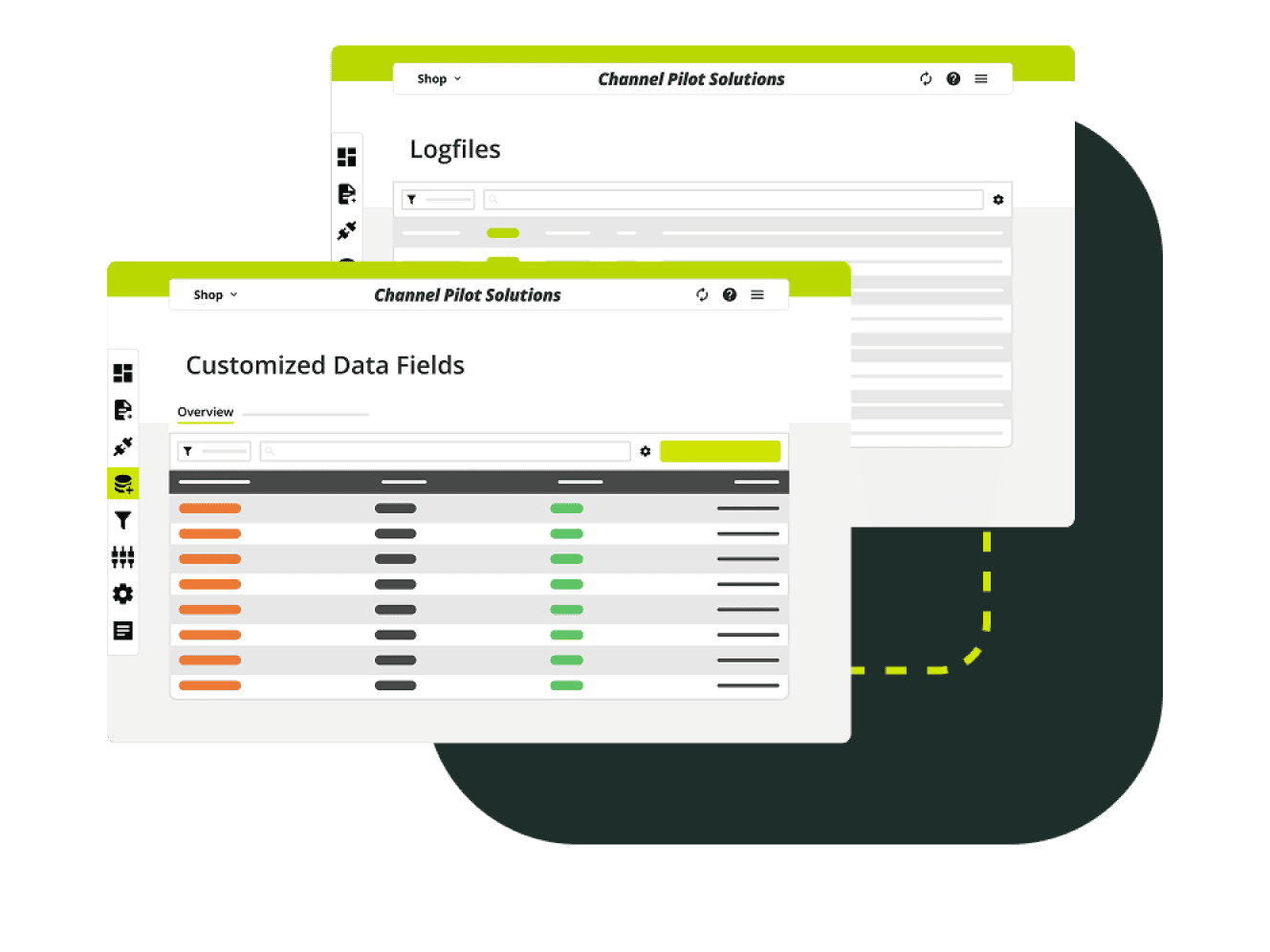
Amazon calls a field „Bullet Points,“ but its own shop doesn't have that. eBay requires different mandatory attributes than Google Shopping. Attribute mapping means connecting your own product data structure with the requirements of each channel. Anyone who does this manually loses hours per week and systematically introduces errors.
Anyone using a central mapping system can publish cleanly on all channels with minimal effort. Those who want to implement this need more than individual solutions – they need a central system that reliably synchronizes product data, channels, inventory, and prices. Channel Pilot Solutions supports you precisely with this: You control your channels centrally, automatically distribute product data, and adjust prices across channels based on rules – without switching tools or data inconsistencies. Learn more now.
What a good multichannel platform must be able to do
A multi-channel sales platform must be able to do more than just manage listings. It needs to process product data, transform it for specific channels, synchronize inventory, automatically adjust prices, and analyze performance data.
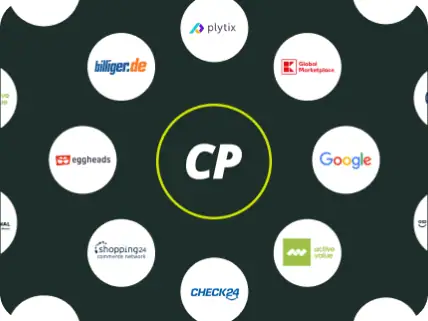
Channel Pilot Solutions bundles Feed Management, Marketplace integrations, Product Data Optimization, Dynamic Pricing and Performance Optimization central in a platform. This enables us to bring traders to 2,500+ sales channels, including 150+ Marketplaces. Our Rule-based price adjustment reaches into Real-time on current competitor and inventory data – for prices that automatically keep pace with market dynamics and availability.
For retailers who sell through three channels today and want to scale up to twenty tomorrow, this offers a clear structural advantage over fragmented, standalone solutions: no scattered development efforts, no patchwork of data from different tools—just a system that grows with their needs.
Conclusion: Multichannel Marketing in E-Commerce: The First Step is Smaller Than You Think
Multichannel marketing in e-commerce isn't rocket science, but rather a methodical approach: choosing the right channels, establishing clean product data as a foundation, carefully handling technical integration, and consistently measuring results. The starting point is always smaller than expected. Those who sell stably on one channel today can start on three tomorrow with solid fundamentals.
The greatest danger is not the first step, but waiting for the perfect moment. Every month without a second channel is a month where competitors are building reach and customer data. This is a general law of digital commerce, regardless of assortment or size. The tools for a structured entry are available and accessible today.
Anyone who is curious can test Channel Pilot Solutions directly with their own product catalog.

OMR Reviews Leader
258 reviews on OMR with 5 stars
Sophie
Content & Social Media Marketing Manager
Sophie writes about e-commerce, digital retail, and everything related to marketplaces. She tracks trends, analyzes developments, and breaks down even complex topics in an easy-to-understand way. As a trained editor, she brings a keen sense of language, storytelling, and target audiences—and applies these skills today in content and social media marketing at Channel Pilot Solutions. When she’s not brainstorming new content ideas, she loses herself in a good TV series or works up a sweat exercising.





 Deutsch
  English
  Español
  Français